MeroMomma
A mobile app and e-commerce platform offering health tools, curated products, and community support for expecting and new parents in Nepal.

Product Owner, Project Manager
2021 — 2023
MATERNAL HEALTH / E-COMMERCE
Figma, Jira, Google Docs
Research
Expecting mothers in Nepal often rely on fragmented resources including family advice, social media groups, scattered web searches, and disconnected clinic visits. There was no single platform combining pregnancy guidance, parenting tools, trusted products, and community support in one experience.
Most existing solutions were designed for Western markets and did not reflect local behaviors, payment systems, or everyday parenting needs within the Nepali context.
Nepal lacked a localized parenting platform that combined health tools, educational content, ecommerce, and community support within a single mobile experience.
The platform combined free health and parenting tools with ecommerce, community engagement, and service-based features to support long-term user retention and product growth.
Existing parenting platforms such as What to Expect and BabyCenter provided useful references for stage-based guidance, community interaction, and health tracking experiences. However, most products were designed for Western audiences and did not reflect local payment systems, parenting behaviors, or accessibility needs relevant to Nepali users.
Persona 1: Expecting Mother
"Am I on track? Is this symptom normal for my week?"
Anxious about doing things wrong with no reliable guide
Googles symptoms, asks family, screenshots advice from WhatsApp groups
"I want one app that tells me what to expect this week."
Persona 2: New Parent
"What products do I actually need vs. what's marketed to me?"
Overwhelmed by choices without trusted local recommendations
Browses Instagram shops, asks friends, buys from whatever's available nearby
"Show me what other Nepali parents are actually buying."
UX Design
The platform aimed to support parents through different stages of pregnancy and early parenting by combining health guidance, curated products, localized content, and community-based support within a single mobile experience.
| CUSTOMER JOBS | PAINS | GAINS |
|---|---|---|
| Track pregnancy week by week | Fragmented health info from unreliable sources | Stage-aware health tools and content |
| Buy baby and maternity products | No local e-commerce for baby products | Curated shop with eSewa/Khalti payment |
| Connect with other parents | Isolation without peer support network | Moderated community forum |
The roadmap evolved from core health tools into commerce, services, and community-driven experiences as the platform expanded.
| Phase 1FOUNDATION | Phase 2PLATFORM & COMMERCE | Phase 3ENGAGEMENT & SCALING |
|---|---|---|
| Pregnancy tracking tools | Website redesign and ecommerce | Community discussions |
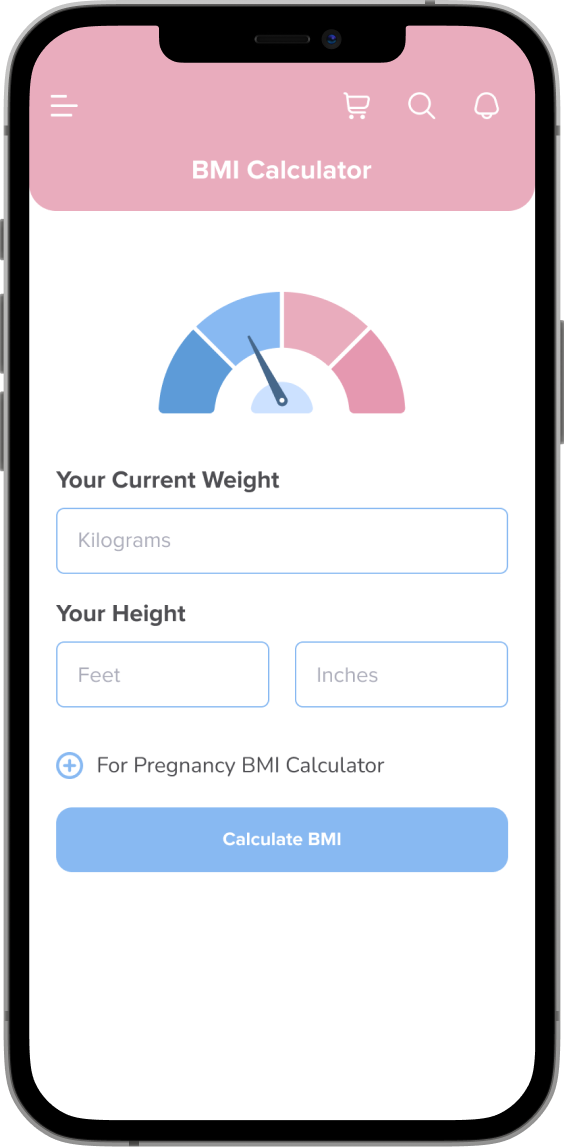
| Due date and BMI calculators | Vendor onboarding | Wishlist redesign |
| Weekly parenting content | Product catalog and checkout | Global search |
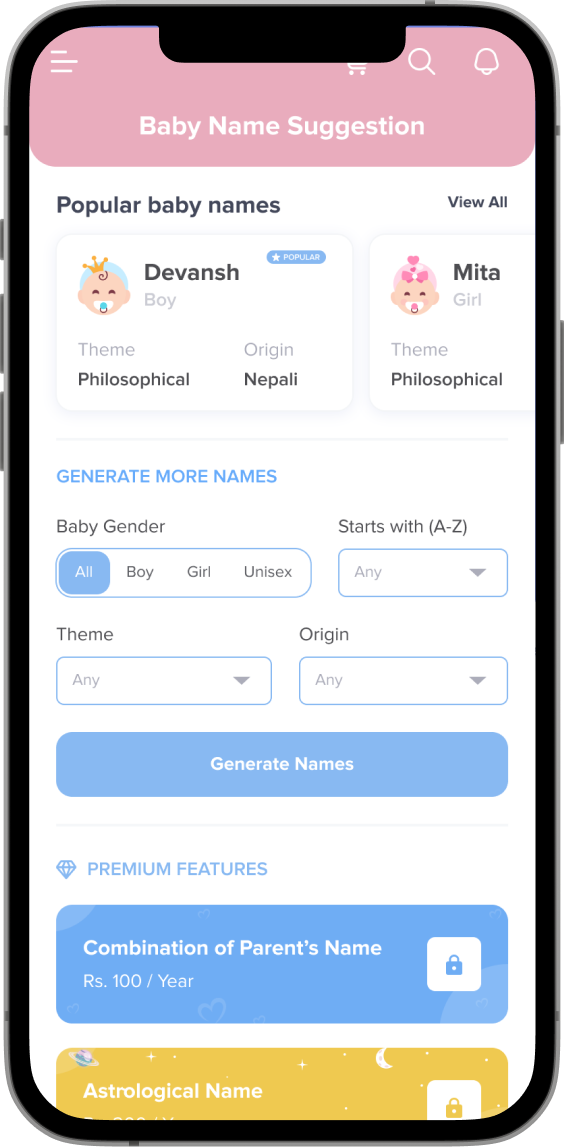
| Doctor and hospital directory | Local payment integration | Baby name suggestions |
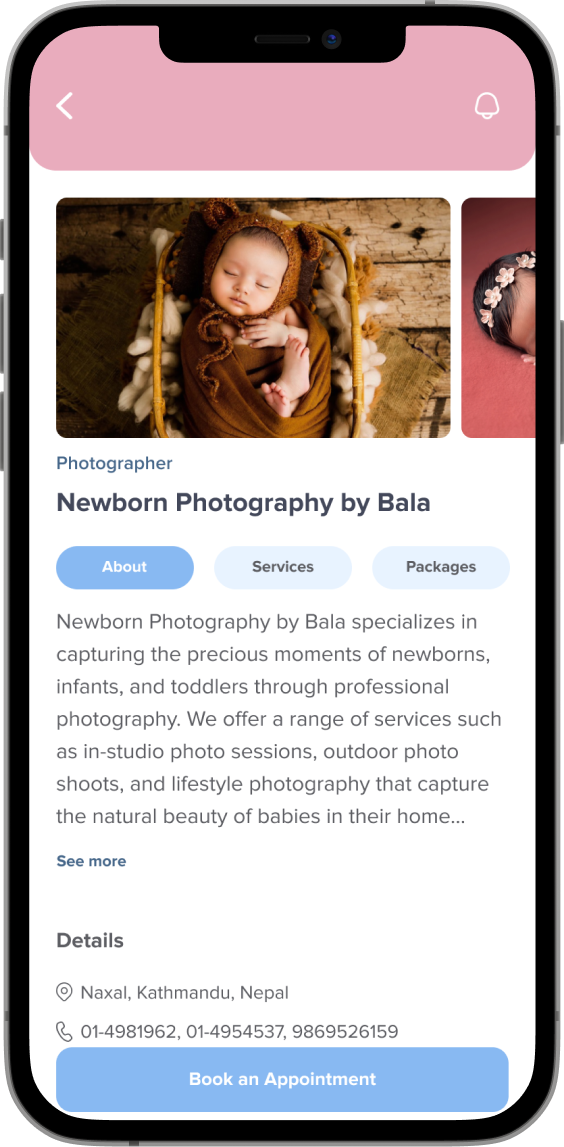
| Blog and educational resources | Order and inventory workflows | Recommended services |
| Gallery and shared moments | Content and admin management | Notification system |
Designed around pregnancy stages and everyday parenting needs. Content, tools, products, and recommendations adapted based on the user’s journey and priorities.
UI Design
Maternal Health Platform
Color
01Type
02Components
03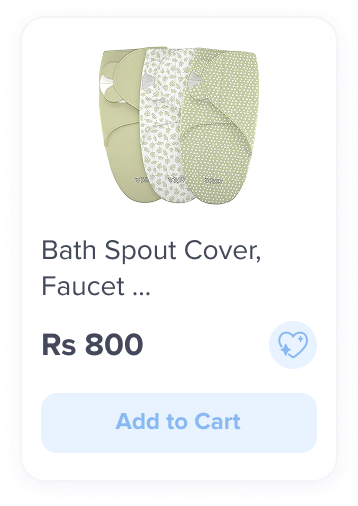

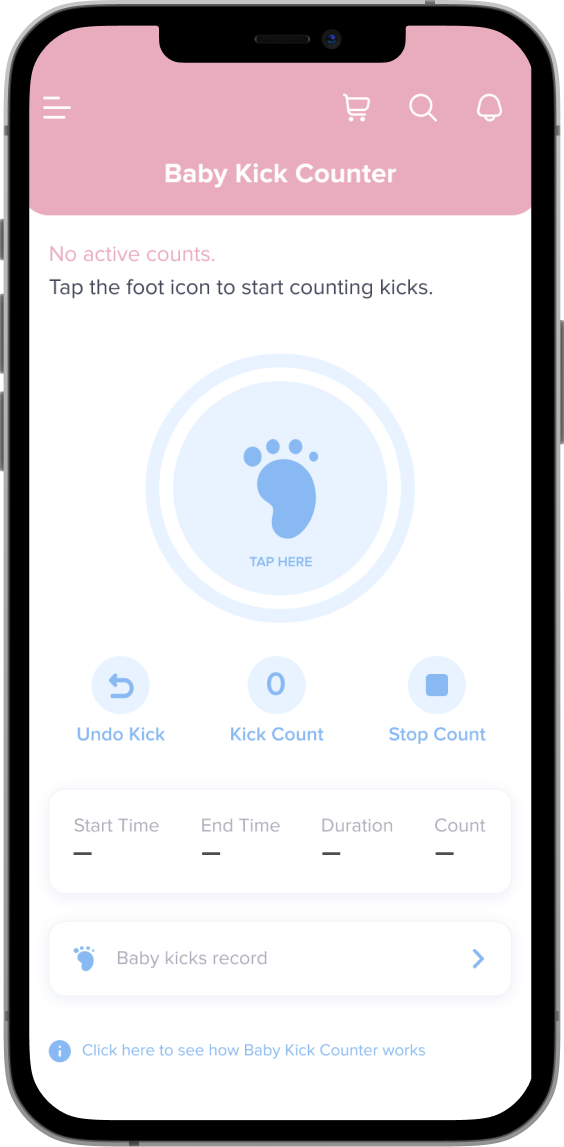
The mobile experience combined pregnancy tracking, educational content, curated commerce, and community interactions within a calm and approachable interface designed for everyday use.


Outcomes
6
PHASES PLANNEDFrom health MVP through e-commerce to community and services.
5
HEALTH TOOLS SHIPPEDDue date, BMI, ovulation, kick counter, and weekly content.
3
REVENUE STREAMSE-commerce, premium features, and a service marketplace.
Scope management is the real product skill
The project included a wide range of ideas spanning health tools, ecommerce, community features, and service integrations. Prioritizing what delivered the most immediate value became essential throughout the product planning process.
Local context changes everything
Designing for Nepal required understanding local behaviors, payment systems, content expectations, and how parents discover and trust information in everyday life. Local context shaped both product decisions and user experience patterns.
The wishlist taught me about hidden use cases
User behavior often revealed opportunities that were not part of the original feature plan. Small interactions around saved products and shared lists showed how parents naturally involved friends and family throughout the purchasing and decision-making process.